IUIU Shares Policy Perspectives on Regional Trade Integration and Higher Education at EAC Conference
- 15th October, 2026 3:38pm
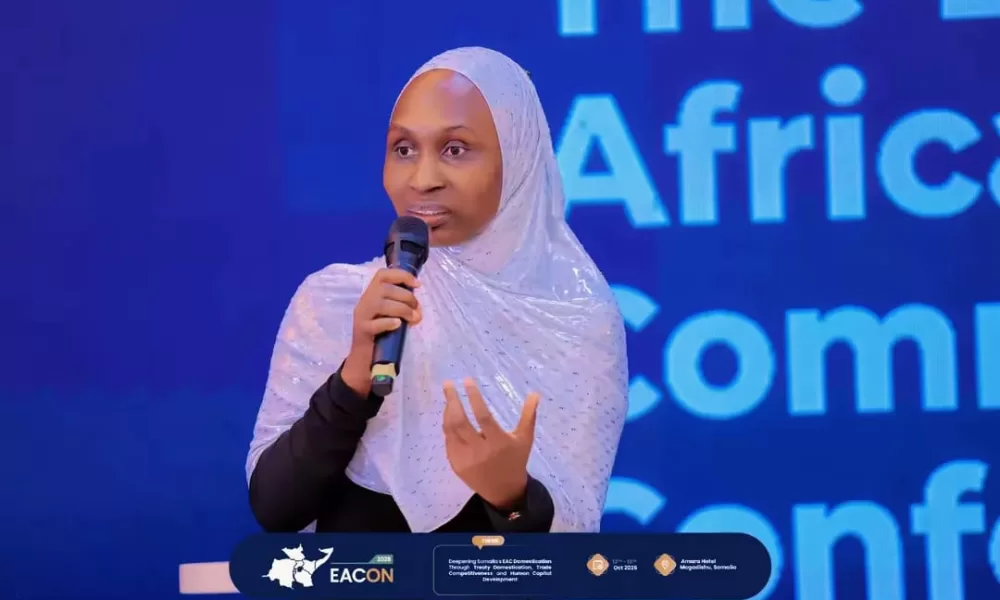
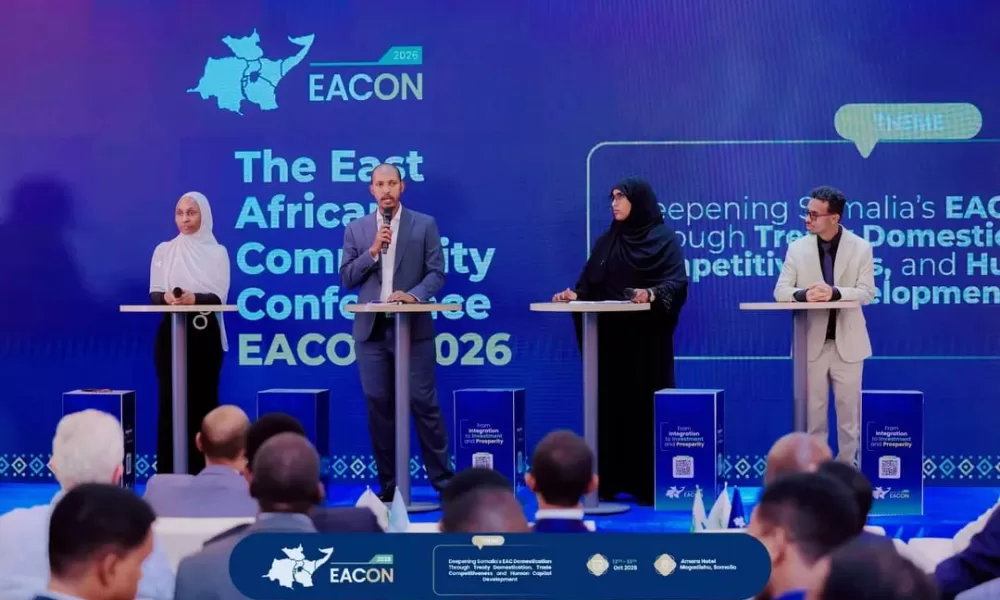
The Islamic University in Uganda (IUIU) has contributed to regional policy discussions on trade integration and higher education development at the 2026 East African Community (EAC) Conference, held in Mogadishu, Somalia, from 12 to 13 October 2026. Nagadya Hamidah, a Lecturer at the Faculty of Law, represented the University and presented research on persistent non-tariff barriers in EAC trade, as well as perspectives on curriculum reform and competence-based education, during a high-level panel on higher education.
During the conference, Hamidah presented her research paper entitled “Persistent Non-Tariff Barriers in EAC Trade: Lessons for Advancing Somalia’s Regional Economic Integration.” The paper examined the persistence of non-tariff barriers (NTBs) within the EAC and identified policy and institutional lessons that Somalia could draw from other Partner States to strengthen trade facilitation and improve its participation in the regional market.
In her presentation, Hamidah highlighted the gap between the EAC's established legal and institutional frameworks for eliminating NTBs and their practical implementation. She observed that traders still face customs delays, repeated inspections, inconsistent standards, import restrictions, administrative bottlenecks, unpredictable trade-related charges, and challenges with rules of origin and transit procedures. These obstacles increase the cost of doing business, delay the movement of goods and create uncertainty for traders.
She explained that the persistence of NTBs is not necessarily attributable to the absence of legal frameworks but may instead arise from weaknesses in implementation, enforcement, institutional coordination, administrative capacity and accountability. Somalia's participation in the EAC therefore presents an opportunity to draw practical lessons from other Partner States while adapting relevant approaches to its legal, institutional and economic circumstances.
Among the proposed reforms were strengthening customs administration, modernising border operations, investing in digital trade facilitation and improving coordination among agencies responsible for cross-border trade. Hamidah highlighted the potential contribution of electronic single-window systems, the EAC Single Customs Territory, One-Stop Border Posts, electronic cargo tracking, risk-based inspections and accessible trade information platforms in reducing administrative delays. She also emphasised the importance of coordination among customs authorities, the Ministry of Commerce and Industry, immigration services, police, standards bodies, health agencies and port authorities. In Somalia, the Ministry of Finance, through the Directorate General of Revenue and the Customs Department, could play a central role in strengthening customs enforcement and operational coordination.
Hamidah cautioned against the wholesale replication of practices adopted by other Partner States, emphasising the need to assess their suitability and adapt them to Somalia's national priorities, institutional capacity, legal framework and operational realities. She further highlighted the importance of accessible mechanisms for reporting, tracking and resolving NTB complaints. Digital platforms, including the EAC NTB Mobile App, could improve communication between traders and responsible authorities and facilitate follow-up on unresolved complaints. However, she noted that a decline in reported complaints does not necessarily indicate the elimination of trade barriers, as it could also result from underreporting, limited awareness or inadequate access to complaint-resolution mechanisms.
To strengthen monitoring, Hamidah advocated for the use of measurable indicators, including customs clearance times, border-crossing times, clearance costs, inspection frequency, cargo rejection rates and NTB complaint-resolution rates. Reliable baseline data and regular monitoring would enable Somalia to identify persistent bottlenecks, assess reform outcomes and support evidence-based policymaking.
In a separate contribution to the high-level panel on higher education, Hamidah advocated for curriculum review and reform through the adoption of a competence-based approach. She emphasised the need for educational programmes that equip learners with practical skills, professional competencies, problem-solving abilities and applied knowledge relevant to contemporary societal, institutional and economic needs. She argued that higher education should move beyond theoretical instruction and prepare graduates for professional practice and meaningful participation in the labour market.
She further stressed that curriculum development needs to reflect the evolving demands of industry, employers, professional bodies and the wider economy. In Somalia's context, reforms should be informed by its social, economic, legal and institutional realities rather than simply replicating curricula developed in other jurisdictions. Hamidah also called for stronger partnerships among universities, industry, professional bodies, policymakers and employers to bridge the gap between academic learning and professional practice, enhance graduate employability and strengthen the responsiveness of higher education institutions.
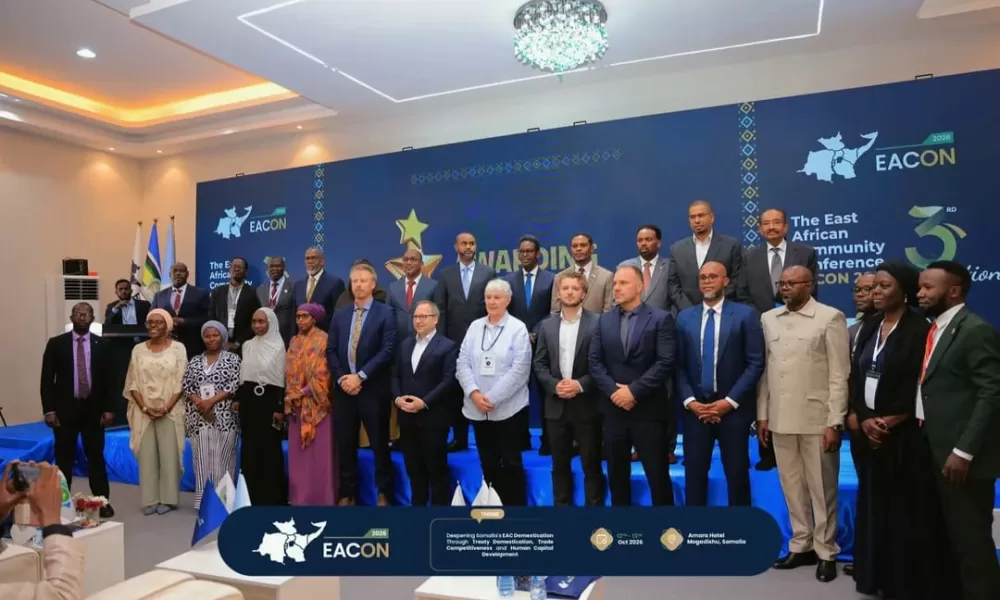
The conference attracted distinguished representatives from government, academia, diplomacy, international organisations and the private sector. Among those in attendance were the Speaker of the Parliament of Somalia, government ministers, university rectors, ambassadors representing various countries and regional communities, representatives of the United Nations and other international organisations, members of the East African Community Business Council, and Ms. Maika Oshikawa, Director of the Accessions Division at the World Trade Organization (WTO).
Hamidah's contributions brought together two important dimensions of regional development: trade facilitation and human capital development. While addressing NTBs is essential to improving market access and facilitating cross-border trade, strengthening higher education is equally important in developing the skilled workforce and institutional capacity needed to support economic competitiveness and regional integration.
The EAC Conference 2026 provided a platform for exchanging perspectives on policy reforms, strategic investments and institutional partnerships. Through her research presentation and contribution to the higher education panel, Hamidah contributed legal, policy and educational perspectives to discussions on advancing intra-EAC trade, strengthening institutional capacity and aligning higher education with the changing demands of the labour market. Her contributions highlighted the importance of translating regional commitments into practical reforms while investing in the human capital necessary for sustainable development.
Hamidah extends her sincere appreciation to all the organisers of EACON 2026 for the excellent organisation and full sponsorship of her participation, and to the Islamic University in Uganda (IUIU) for its institutional support.